
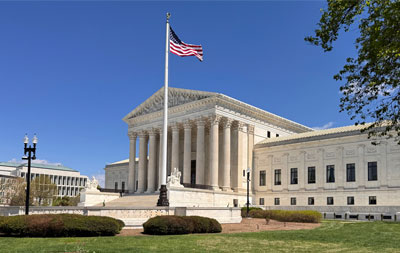
The U.S. Supreme Court on Thursday handed a resounding victory to law-abiding gun owners and everyone who believes in the Constitution and the rule of law.
In a vitally important 6-3 decision, the court agreed with the plaintiff in Wolford v. Lopez that Hawaii’s so-called “vampire rule” violates the Second Amendment and will not stand. This oppressive restriction was enacted in direct opposition to the high court’s landmark 2022 Bruen decision.
Lawmakers demonstrated an utter lack of respect for the US Supreme Court
Hawaii was one of a handful of outlier states that tried to countermand the Supreme Court’s clear will.
In the process, officials reinforced the unconstitutional gun control regime that saw only FOUR concealed carry permits issued to island residents from 2000 to 2018.
Effectively, Hawaii denied the right to lawfully possess a weapon for self-defense away from one’s home. The Bruen ruling should have been enough to show lawmakers that their system directly opposed the law of the land.
Hawaii flipped the traditional common law on its head to suppress carry rights
Instead, like recalcitrant children, officials doubled down, making the system even worse.
Like a magician wowing a crowd with sleight-of-hand tricks, Hawaii’s government incredibly reversed traditional common law to restrict gun rights. Instead of the people enjoying implied permission to enter a public business, gun owners needed to obtain expressed consent from the owners.
Instead of having establishment owners make their own determination on carrying on the premises, the default changed to “no guns allowed” unless otherwise posted.
The Supreme Court brushed this flimsy arrangement aside in favor of the Bill of Rights.
“This arrangement imposes a new burden on permit holders who will have to obtain permission to carry a firearm on the property before stepping foot on it,” the court noted. “The law severely hampers the ability of law-abiding citizens to exercise the right Bruen recognized as they go about their daily lives.”
Exactly.
Writing for the court’s majority, Justice Samuel Alito flatly rejected the state’s gun control regime and reasserted constitutional authority.
“Hawaii’s law at issue here violates the constitutional right to keep and bear arms,” the jurist wrote. “This regime hobbles what the Second Amendment protects: the right of Americans to carry arms for self-defense as they go about their daily lives. We hold that the law is unconstitutional.”
Alito noted the undue pressure placed on both businesses and law-abiding gun owners.
He used an example of a woman carrying a firearm due to threats from a former partner and trying to go about her day. “Unless each of these establishments has a sign posted saying ‘Guns Welcome’ or something to that effect, each visit could expose her to criminal liability.”
A truly bizarre aspect of Hawaii’s argument was that the archipelago has a unique history and should therefore be exempt from certain constitutional guarantees.
“The Second Amendment cannot give way to ‘the spirit of Aloha’ in Hawaii any more than it can yield to the spirit of the Big Apple or the Windy City,” Alito wrote. “Merely local attitudes can neither shrink nor inflate the meaning of fundamental Bill of Rights guarantees.”
Of all the arguments the state presented, this surely was the most absurd. The U.S. is blessed with many unique cultural traditions, such as the Cajuns in Louisiana and the Pennsylvania Dutch, just to name two.
Now, imagine a law-abiding American losing the freedoms of speech or religion based on these local customs and traditions.
That, as any prudent observer knows, is a slippery slope that the Supreme Court wisely chose to steer clear of.
Incredibly, Hawaii’s attorneys also cited post-Civil War Black Codes as part of the country’s “history and tradition” of gun laws to justify their restrictions. Racist statutes of bygone eras are remembered as exactly that, not as precedents for courts to follow in 2026.
Justice Elena Kagan wrote one dissent, while Justice Ketanji Brown Jackson joined Justice Sonia Sotomayor in a separate opinion. Jackson claimed the issue was not gun rights, but those of private property owners.
“There is no constitutional right to enter private property without the owner’s permission, let alone with a firearm,” Jackson wrote. “So, the question this case presents is merely how a property owner must communicate his decision to exclude or invite armed carry, including whether a State may alter the background property-law rules that set the default as one or the other.”
There’s no better way to show your patriotism than with merch that speaks before you do.
Defend America is more than a name, it’s a stand for freedom, resilience, and the values this country was built on. Every tee, hat, and mug is a symbol of unapologetic pride. Wear it loud, wear it proud, and let the world know: freedom isn’t negotiable.
Click the link below to join the movement.